 EP 155m
1. The Infinite Variety
The first ever episode of the landmark natural history series Life on Earth. David Attenborough explores the wildlife and landscape that inspired Charles Darwin's theory of evolution.
Jan 16, 1979
Get Reelora on your phone, tablet or computer for one-tap access.
The story of life, from the first primitive cells to the plants and animals that now live around us.
The complete episode guide with air dates and runtimes.
EP 155mThe first ever episode of the landmark natural history series Life on Earth. David Attenborough explores the wildlife and landscape that inspired Charles Darwin's theory of evolution.
 EP 254m
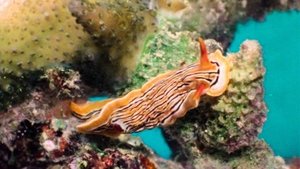
Bright blue starfish, crimson feather stars, shell-less snails in designs as extravagant as any Paris fashion show, shrimps of every colour, others that are transparent - just a sample of the animal wonders to be found in a small area of the Great Barrier Reef.
 EP 354m
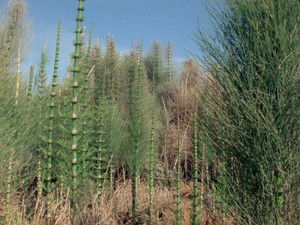
For most of Earth's history there was no life on land. But over 400 million years ago some tiny plants began an invasion from the water, closely followed by the first animals - the ancestors of millipedes and insects.
 EP 455m
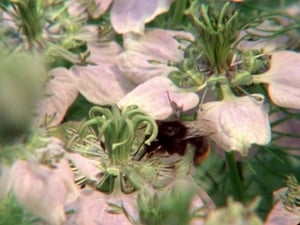
David Attenborough looks at the role of a few of the millions of insect species, some of which have developed extremely close relationships with plants. Insects pollinate flowers and in some cases neither flower nor insect can survive without the other.
 EP 555m
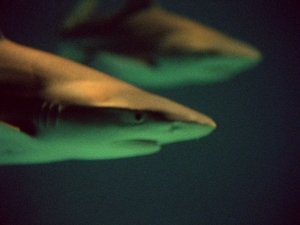
Fish occur in populations of billions and there are over 30,000 species, more than in any other group of backboned animals. The development of the backbone was a crucial advance in evolution -and it probably came from a most unlikely source, a little jelly-like creature called a sea squirt.
 EP 655m
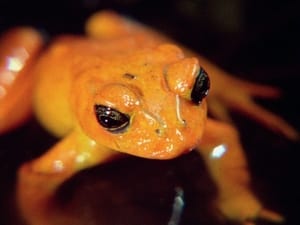
Some 350 million years ago, evolution reached one of its most crucial stages when fish crawled from the water onto the land and became amphibians. Today, newts, salamanders, toads and frogs still survive in great quantities, and there is even one species of frog where the male gives birth from its mouth! Presented by David Attenborough.
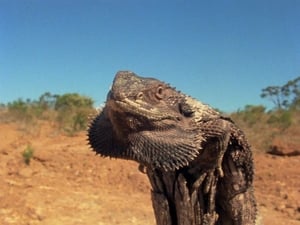 EP 755m
David Attenborough looks at the history of reptiles, the first back-boned creatures to solve the problems of living high and dry on the land. Their waterproofed skin and sealed eggs enabled the mighty reptiles to rule the world.
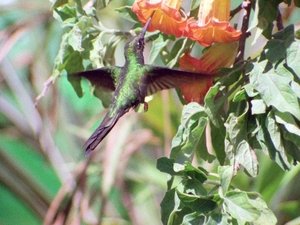 EP 854m
The story of life, from the first primitive cells to the plants and animals that now live around us. David Attenborough examines the uses and advantages of birds' unique possession - the feather. Man has yet to invent anything that, weight for weight, is as strong as the feather. Feathers are insulators, they provide the surface of the most perfect aerofoils known - bird's wings. Plus they play a central role in courtship.
 EP 954m
Mammals have proved to be one of the most adaptable products of evolution. David Attenborough looks at their evolution from reptiles 200 million years ago. This remarkable transition involved the development of mechanisms for regulating body temperature, for allowing the young to develop in the womb and for suckling newborns. Attenborough also explores the South American origins of marsupials and their colonisation of Australia.
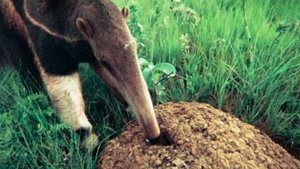 EP 1053m
A little furry animal from the jungles of South East Asia, called a tree shrew, has attracted great interest from scientists because it shows how a great group of animals may have originated - the mammals. David Attenborough looks at some of the huge variety of mammals. Bats number over a thousand species, many hunt insects, some sip nectar, drink blood, and even catch fish. Contrast those which use sonar with the great whales that sing, the star-nosed mole and the giant anteater, and the potential variations become dramatically clear.
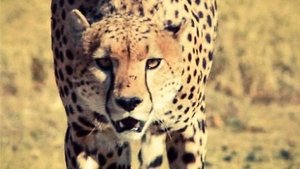 EP 1155m
David Attenborough explores the eternal duel between the hunters and the hunted - one of the driving forces of evolution. As the hunters develop speed and cunning, the prey becomes increasingly fast and wary in order to stay alive. Nowhere is this seen better than on the plains of East Africa.
 EP 1255m
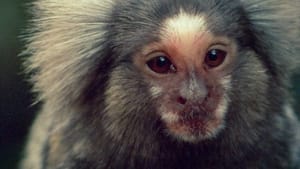
David Attenborough's now-legendary encounter with young gorillas is featured in this episode as he looks at the history of primates, whose ancestors sought their fortune in the treetops. There they developed binocular vision for accurately judging distances, and the ability to grasp trees with a firm grip. The group includes dazzling gymnasts, deafening choristers and highly cultured monkeys.
 EP 1354m
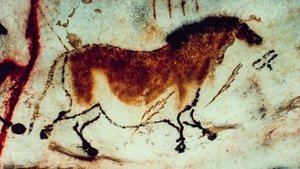
David Attenborough looks for crucial clues that help to explain how and why we have come to dominate life on earth. He traces back the African origins of humans to nearly three million years ago, and along the way he goes into caves in southern France where Stone Age people created imaginative paintings of ice-age animals. He also travels to Papua New Guinea to find some hunter-gatherers who have never before set eyes on white people.
Services carrying Life on Earth in the US.
Stream


Availability data by JustWatch, via TMDB.